Flock Cameras
A dive into big brothers newest asset--flock camera technology
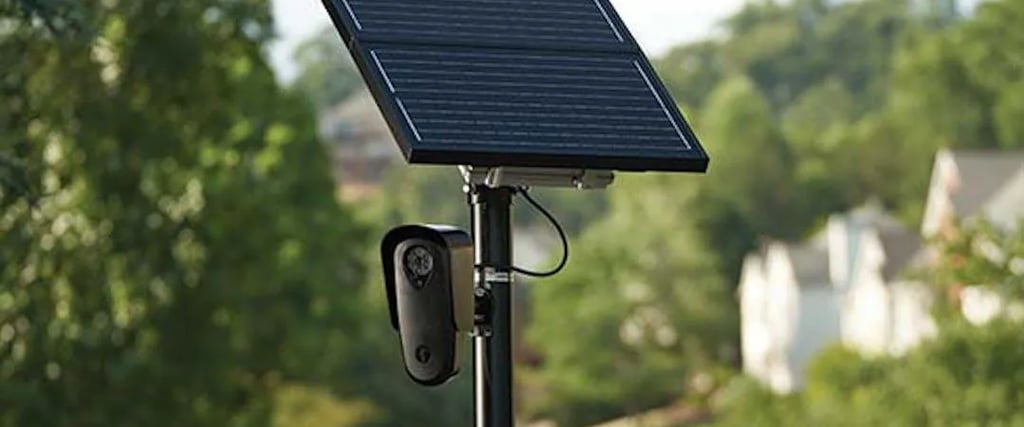
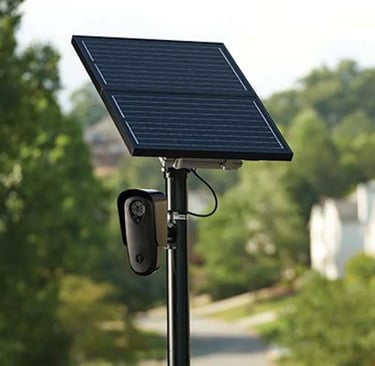
Flock Safety Cameras: Public Safety or Quiet Surveillance Creep?
CHECK IF YOU HAVE BEEN FLOCKED HERE: https://haveibeenflocked.com/
Across cities, suburbs, and even rural towns, a new kind of camera is appearing at intersections, apartment entrances, and commercial corridors: Flock Safety cameras.
Marketed as “crime-fighting” tools, these automated license plate recognition (ALPR) systems promise faster investigations, stolen vehicle recovery, and safer communities. But behind the clean branding and reassuring sales pitch lies a deeper question:
What does mass vehicle tracking mean for privacy in everyday life?
This article examines Flock cameras not from a law-enforcement or vendor perspective—but through a privacy, civil liberties, and operational security (OPSEC) lens.
What Are Flock Cameras, Exactly?
Flock Safety cameras are networked ALPR systems designed to:
Capture images of vehicles and license plates
Record timestamps and locations
Store data in a centralized cloud platform
Allow searches by plate number, vehicle type, color, stickers, or travel patterns
Share data between agencies, HOAs, apartment complexes, and businesses
Flock emphasizes that their cameras “don’t use facial recognition.” While technically true, this framing misses the point.
You don’t need faces to track people.
Why License Plate Tracking Is Still Personal Surveillance
A license plate is not anonymous in practice.
When plate data is combined with:
Location
Time
Frequency
Direction of travel
Patterns over days or months
…it becomes a proxy for tracking an individual’s movements, habits, and associations.
From a privacy standpoint, this enables:
Mapping where someone lives, works, worships, or seeks medical care
Inferring political, religious, or personal activities
Tracking people who are not suspected of any crime
Retroactive surveillance (searching where someone was, not just where they are)
This is functionally mass location surveillance, even if it’s framed as “vehicle data.”
The Normalization Problem: Surveillance Without Suspicion
One of the most concerning aspects of Flock cameras is how quietly they spread.
Unlike police body cameras or CCTV systems:
They are often installed by HOAs or private entities
There may be no public vote or meaningful consent
Signage is minimal or nonexistent
Retention policies vary widely (30 days, 90 days, 1 year+)
In many cases, people don’t know they’re being logged at all.
This flips the traditional model of surveillance:
Instead of watching suspects, we now record everyone—just in case.
Data Sharing: Where Things Get Murky
Flock’s platform allows data sharing across jurisdictions and organizations.
That means plate data collected by:
A gated community
A retail plaza
An apartment complex
…can be accessed by:
Local police
Regional task forces
Other agencies entirely
Once data leaves the original collector, control erodes quickly.
Questions rarely answered clearly:
Who approves access?
Is a warrant required?
Are searches logged and audited?
Can data be used for non-criminal purposes?
What happens if policies change later?
History suggests that data collected for one purpose often expands to others.
“If You’ve Done Nothing Wrong…” Is the Wrong Framework
A common defense of ALPR systems is:
“If you’re not doing anything illegal, you have nothing to worry about.”
This argument ignores several realities:
Privacy is not about hiding crimes—it’s about preserving autonomy
Laws change; data collected today can be used under future standards
Innocent people are misidentified all the time
Data breaches and misuse are inevitable, not hypothetical
Surveillance disproportionately impacts marginalized groups
Privacy exists to protect people before something goes wrong—not after.
Long-Term Risks We Should Be Talking About
The danger of systems like Flock isn’t a single misuse but rather infrastructure lock-in.
Once a community normalizes:
Ubiquitous sensors
Always-on data collection
Cloud-hosted movement histories
…it becomes very difficult to roll back.
Potential future uses include:
Automated fines or restrictions
Behavioral profiling
Insurance risk scoring
Civil enforcement beyond criminal law
Integration with other datasets (phones, tolls, parking, EV chargers)
Surveillance rarely shrinks. It compounds.
What Privacy-Conscious Individuals Can Do
While avoiding these systems entirely is nearly impossible, you can still reduce exposure:
Understand where ALPR systems are common in your area
Limit predictable travel patterns when feasible
Avoid oversharing location data online that can be correlated
Support transparency and audit requirements at the local level
Ask HOAs and municipalities about retention, access, and sharing policies
Awareness is the first layer of defense.
Final Thoughts: Technology Is Never Neutral
Flock cameras are not inherently evil—but they are not neutral tools.
They reflect a broader trend:
Trading long-term civil liberties for short-term convenience and perceived safety.
The question isn’t whether Flock cameras can solve crimes.
It’s whether we’re comfortable living in a society where movement itself becomes a permanently stored data point.
Once that line is crossed, it’s very hard to uncross it.
Explore bold ideas on self-mastery, digital privacy, and dangerous skills.
CrypticChemistry@proton.me
© 2025. All rights reserved.